
“The Amazing Inventor of Peanut Butter”
이전 게시물 다음 게시물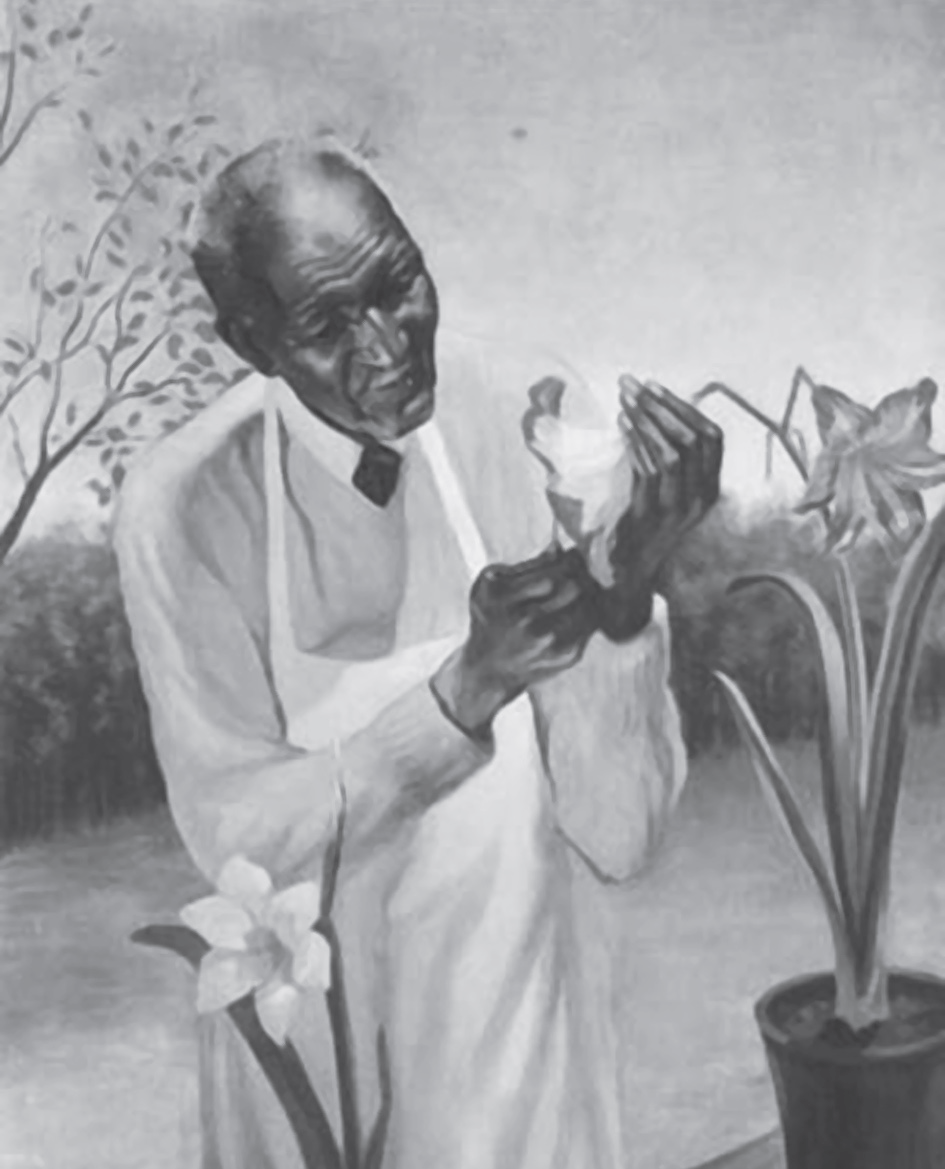 “땅콩버터 발명가 이야기”
demonstrated an amazing ability to commune with living things. On his neighbors’farms he routinely found plants to heal sick animals. When farmers’ wives began to ask him to care for their sick house plants, the boy sang to the plants and tended them in his own specially prepared soil. When asked how his plants always bloomed again, he replied,“All flowers talk to me and so do hundreds of little living things in the woods. I learn what I know by watching and loving everything.”
In 1896 Carver earned a master’s degree from the Iowa State College of Agriculture and was asked to join the faculty. However, Booker T. Washington, the renowned African American leader and founder and president of the Normal and Industrial Institute, asked Carver to run the institute’s agricultural department instead. Carver turned down the well-paying
소통하는 놀라운 능력을 보였는데, 아픈 동물들을 치료할 수 있는 풀들을 이웃 농장에서 정기적으로 발견해오기도 했다. 이웃 농장의 부인들이 그녀들 집의 병든 화초를 돌봐달라고 부탁하게 되자, 소년은 그 화초들에게 노래를 불러주었고, 그가 특별히 준비한 흙에 화초들을 길렀다. 그가 키우는 식물들마다 어쩜 그렇게 어김없이 다시 꽃을 피우게 되느냐는 질문에, 그는 이렇게 대답했다.“모든 꽃들이 저한테 얘기를 해요. 숲 속에 사는 수백 개의 작은 생물들도요. 제가 아는 건 모든 걸 보고 사랑하면서 배운 거예요.”
1896년 아이오와 주립대학의 농과대학에서 석사학위를 받은 카버는 아이오와 대학교의 교수직 제안을 받는데, 부커 워싱턴 또한 카버에게 터스키기 농과대학을 맡아달라는 부탁을 하기에 이르렀다. 부커 워싱턴은 미국의 저명한 흑인 지도자이자 터스키기 일반공업대학(현現 터스키기 대학교 Tuskegee University)의 초대 총장이다. 당시 터스키기 일반공업대학은 아프리카계 미국인을 위한 교육기관이었
조지 워싱턴 카버는 미국의 남북전쟁이 막바지에 다다랐을 무렵 미주리 주州에서 노예로 태어났다. 어릴 때 카버는 생물들을 벗 삼아
George Washington Carver was born a slave in Missouri, USA shortly before the end of the Civil War. As a child, Carver
35
position at Iowa in order to serve his people.
At the institute Carver discovered that the farmers of the American South were exhausting their farmland by planting only cotton which depletes soil of its nutrients. Furthermore, a catastrophic boll weevil infestation was destroying much of the cotton crop. In order to address this crisis, he set up a private laboratory wholly devoid of books where he would sit for hours each day, communing with plants. Every morning at 4 a.m. Carver also wandered through the woods in order to bring back numerous plants which he used to illustrate his lectures. He explained this habit to his friends,“Nature is the greatest teacher and I learn from her best when others are asleep.”
Carver’s research ultimately led him to the peanut. He learned that the peanut was able to grow well in poor soil. It also equaled beef in protein and potatoes in carbohydrates. Carver began to promote the peanut as an alternative crop to cotton which could be sold as well as eaten. When the farmers expressed doubt, Carver began to issue educational bulletins which over time provided 105 food recipes that use peanuts. One such bulletin taught that a highly nutritious and flavorful kind of butter could be made from the peanut. Whereas it took 100 pounds of milk to make 10 pounds of butter, 100 pounds of peanuts could produce 35 pounds of peanut butter. Thus was born one of the most popular food items in the world.
고, 카버는 그들을 위해 아이오와에서의 좋은 보수가 보장되는 직책을 내려놓았다.
터스키기 대학에 있는 동안, 카버는 미국 남부의 농부들이 땅을 황폐화시키고 있다는 것을 알게 됐다. 그들은 밭에 목화만을 재배하고 있었는데, 목화는 땅의 영양분을 고갈시키는 식물이었던 것이다. 더군다나 목화다래바구미라고 하는 치명적인 병충해가 기승을 부려 목화재배를 망쳐놓고 있었다. 그러자 그는 이 문제를 해결하기 위해, 책이라고는 한 권도 없는 개인연구소를 만들고는 식물들과 의사 소통하며 날마다 몇 시간이고 시간을 보냈다. 또한 매일 새벽 4시에 집을 나서 숲을 돌아다니며 강의시간에 학생들에게 보여줄 수많은 식물들을 채집해왔다. 그는 이런 습관에 대해 친구들에게 다음과 같이 설명했다. “자연은 내 가장 위대한 스승이라네. 그런데 다른 사람들이 잠들어 있을 때 난 스승으로부터 가장 좋은 걸 배우거든.”
카버의 연구결과가 낳은 해결책은 땅콩이었다. 땅콩은 척박한 땅에서도 잘 자란다는 것을 알게 됐기 때문이다. 땅콩은 고기에 버금갈 정도로 많은 단백질을 함유하고 있는 데다, 탄수화물 함유랑은 감자만큼 풍부하다. 카버는 팔거나 먹을 수 있는 땅콩을 목화의 대체 작물로 사람들에게 장려하였다. 그러나 농부들이 땅콩의 효능을 쉽사리 믿지 않자, 그는 교육용 회보를 발간하여 땅콩을 이용해 만들 수 있는 105가지의 요리법을 하나씩 선보이기 시작했다. 그리고 바로 그 회보에 땅콩을 이용하여 영양이 풍부하고 맛있는 버터를 만드는 법이 소개되었다. 4.5kg의 버터를 만들기 위해 45kg의 우유가 소모되는 반면, 45kg의 땅콩으로 약 16kg의 땅콩버터를 만들어낼 수 있었다. 이리하여 세상에서 가장 인기 있는 음식 중의 하나가 탄생되었다.
카버는 계속된 연구를 통해 땅콩으로 만들 수 있는 약 100여 가지의 상품을 개발해내었다. 이 상품들은 가정생활과 농사에 모두 도움이 되는 것들로, 화장품, 염료, 페인트, 플라스틱, 가솔린 그리고 니트로글리세린 등이었다. 이와 더불어 그는 고구마로 다양한 물건을 생산해내는 법도 알아냈다. 제1차 세계 대전이 발발하면서 염료가 부족해지자, 카버는 다시 식물들에게서 536가지 종류의 염료를 개발했다. 이 염료들은 모직, 면, 린넨, 실크 그리고 심지어는 가죽까지도 물을 들일 수 있었는데, 그 중 49개의 색은 머루 한 가지로부터 만들어낸 것이었다.
어느덧 유명인사가 된 카버는 워싱턴으로 초대되었고, 그가 개발해낸 상품들로 의원들은 탄성을 자아냈다. 그 중에는 후에 미국우표 접착제의 성분이 된 녹말도 포함되어 있었다. 또한 카버의 농과대학에서는 고구마가루를 일반 밀가루와 혼합시킴으로써 하루 90kg의 밀 소비를 줄이고 있다는 사실이 알려지면서, 전시戰時에 밀을 절약하는 방법에 관심 있는 영양사들과 음식평론가들이 그를 방문했다. 그 사람들을 기다리고 있던 것은 5가지 코스의 푸짐한 식사와 매우 맛있는 빵-모두 땅콩, 고구마 그리고 그 지방의 야생 식물로 만든 것이었다. 1930년에 이르렀을 때는, 한때 주목받지 못하던 땅콩이 거대한 산업의 초석이 되었고, 가장 가난하다고 하는 가족들도 구입할 수 있었던 땅콩버터는 미국인들이 가장 좋아하는 음식 중 하나가 되어가고 있었다.
As Carver continued his investigations, he was able to develop approximately 100 products that could be made from peanuts. These were useful for both the house and farm and included cosmetics, dyes, paints, plastics, gasoline, and nitroglycerin. Carver also discovered how to make dozens of products from sweet potato. When a shortage of dye stuffs occurred at the outset of World War I, Carver again consulted with his plants and from their parts he developed 536 separate dyes, which could color wool, cotton, linen, silk, and even leather. Forty-nine of them came from the scuppernong grape alone.
Now famous, Carver was called to Washington and there dazzled officials with dozens of products, including a starch which later became a component in the glue of U.S. postage stamps. When it was learned that his institute was saving 200 pounds of wheat per day by mixing ordinary flour with a new sweet potato-based flour, dieticians and food writers interested in economizing on wheat during wartime went to visit him. They were greeted with delicious breads made from mixed flours along with 5-course meals made from peanuts, sweet potatoes and local wild plants. By 1930, the once worthless peanut had become the basis of a huge industry and peanut butter was becoming one of America’s favorite foods, affordable for even the poorest families.
During these decades of research, Carver almost never took out a patent-in spite of the fact that he had created fortunes for thousands of others. He believed that his inventions should be shared for free. American inventors Thomas A. Edison and Henry Ford both considered Carver the greatest scientist of their day and sought to recruit him with huge salary offers only to meet refusal. In 1941, Time magazine dubbed him“Black Leonardo”, a reference to the medieval European polymath Leonardo da Vinci.
Shortly before Carver’s death in 1943, a visitor saw him reach out to touch a little flower on his workbench. Carver said,“When I touch that flower, I am touching infinity. It existed long before there were human beings on this earth and will continue to exist for millions of years to come. Through the flower, I talk to the Infinite, which is only a silent force. This is not a physical contact. It is not in the earthquake, wind or fire. It is in the invisible world. It is that still small voice that calls up the fairies.”
To commemorate his life and inventions, George Washington Carver Recognition Day is celebrated in the United States on January 5th, the day Carver died.
하지만 수십년에 걸친 연구 활동을 통해 수많은 사람들에게 경제적 번영을 가져다주었음에도 불구하고, 카버 그 자신은 단 하나의 특허권도 등록하지 않았다. 그의 발명의 산물들은 어떤 대가 없이 모두가 공유해야 하는 것이라고 믿었던 탓이다. 미국의 유명한 발명가 에디슨과 헨리 포드는 모두 카버를 그 시대의 가장 위대한 과학자라고 생각하였으며, 어마어마한 보수를 제시하며 그를 채용하고 싶어했으나 거절만 당했을 뿐이었다.
1943년 카버가 죽기 얼마 전, 한 방문객이 작업대에 있는 작은 꽃을 향해 손을 뻗치는 카버의 모습을 보게 되었다. 그때 카버는 이렇게 말했다고 한다.“꽃을 만질 때, 난 영원을 만지고 있는 거랍니다. 인간이 이 지구에 오기 아주 오래 전부터 존재했었고, 앞으로 다가올 수백만 년 후에도 계속 존재할 거예요. 꽃을 통해서 나는 그 무한한 영겁의 세계와 얘기를 나누죠. 근데 이건 어떤 침묵의 힘이지, 신체적인 접촉은 아니에요. 지진 속에서도, 바람 속에서도, 불 속에서도 찾아볼 수는 없어요. 보이지 않는 세계니까.... 요정들을 부르는 건 고요하고 작은 목소리잖아요.”
카버의 생애와 그의 발명의 업적을 기리기 위해, 미국에서는 조지 워싱턴 카버의 날을 기념하고 있다. 그날은 1월 5일, 카버가 세상을 떠난 날이다.

경상남도 합천군 가야면 해인사길 122 전화번호:055-934-3006 팩스:055-934-3010
COPYRIGHT 2012 월간해인 ALL RIGHT RESERVED